
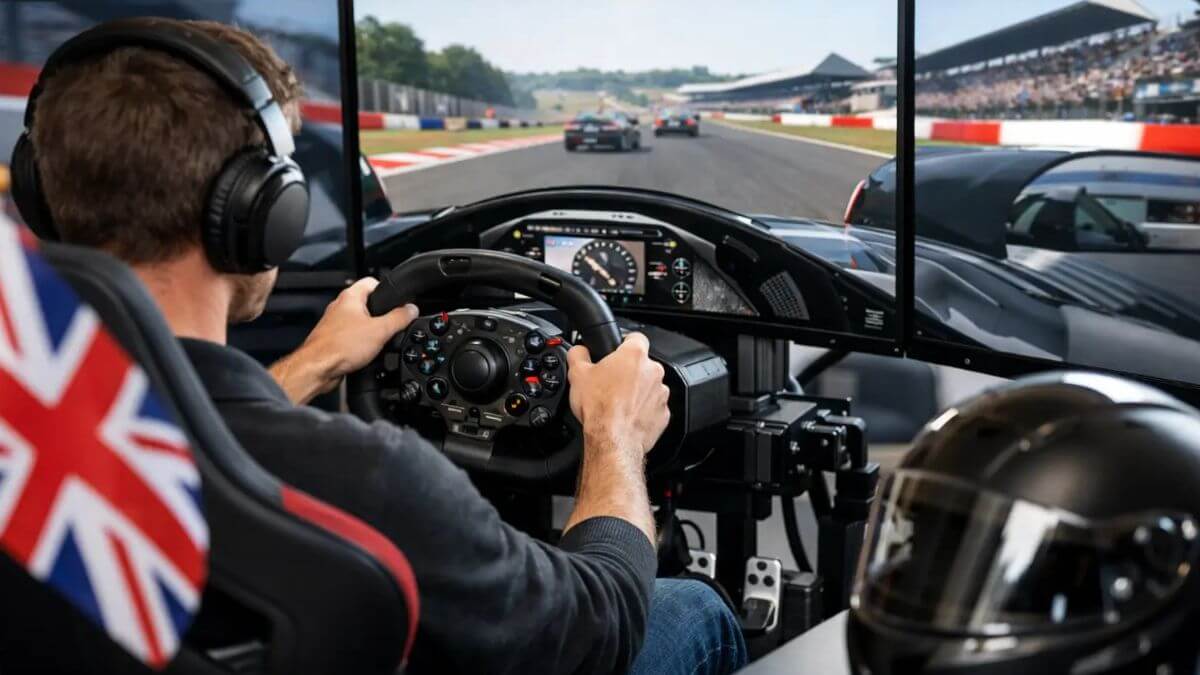
A good racing simulator can be brilliant fun, but it can also become a money pit surprisingly quickly. Plenty of people start sim racing thinking they just want a steering wheel for the spare room, then six months later they are pricing up aluminium rigs, load cell pedals and monitors that cost more than a new car. The trick is knowing how to build a sim racing setup that improves your sim racing experience and avoids expensive clutter.
That matters because sim racing gear is sold with the same sort of marketing fluff you see elsewhere in the motoring world – bold claims, shiny hardware and not always much honesty about what makes a real difference at home. If you are a driver who wants something fun, realistic and worth the money, the smart move is to build your setup around how you will actually use it.
What a sim racing setup should do well
At its best, a racing sim gives you three things. First, it should feel convincing enough that your inputs matter and the car behaves in a way that makes sense. Secondly, it should be comfortable enough that you want to use it regularly rather than treating it as a novelty. Thirdly, it should offer enough flexibility that you are not forced into another expensive upgrade after a month.
That does not mean you need a professional-grade sim racing setup. For most people, realism has a point of diminishing returns. A £250 to £500 wheel and pedal set can feel properly engaging. A £1,500 direct drive setup can feel better, but not everyone will enjoy it three or four times more. That gap matters if you are trying to spend sensibly.
The biggest mistake beginners make is chasing peak realism before sorting the basics. If your chair moves under braking, your pedals slide across the floor and your wheel is clamped to a wobbly desk, even very good hardware will feel disappointing.
Choosing a sim racing setup without wasting money
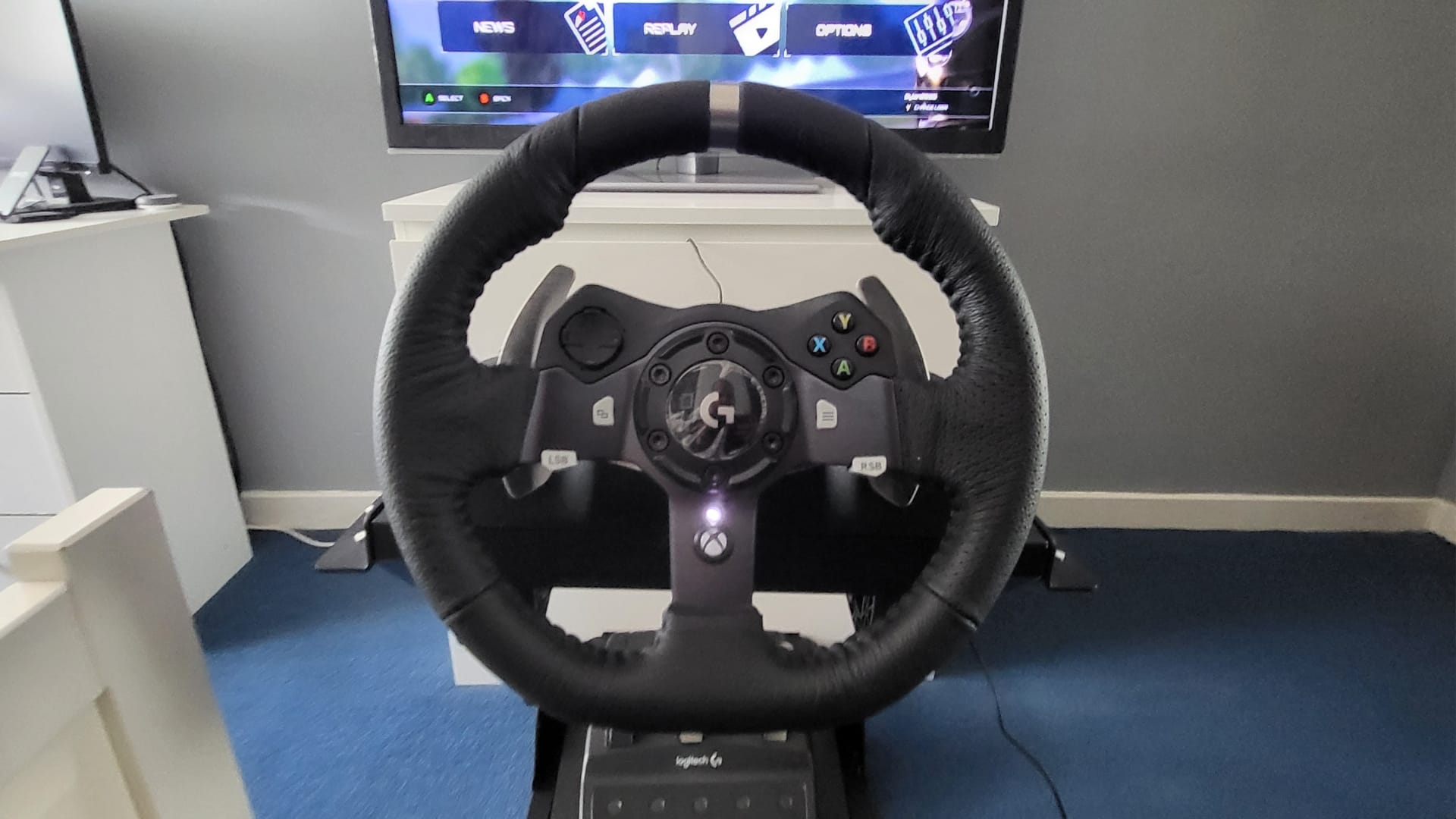
The sensible way to approach a sim racing setup is to split it into layers. Your core experience comes from the wheel, pedals, seat position and the game itself. Everything else is secondary until those are right.
Wheel and force feedback
This is where most buyers start, and fairly enough. The wheel is the part you physically interact with all the time. Entry-level systems from major brands like Moza Racing can still be excellent fun, especially if you mainly want to race casually after work or on weekends.
The key difference is usually force feedback quality. Cheaper wheels often feel a bit notchy or vague, while better systems give clearer information about grip, kerbs and weight transfer. That said, some people massively overstate this. If you are new to sim racing, even a modest force feedback wheel will feel like a major step up from a controller.
Direct drive wheels are the current aspirational option, and for good reason. They are smoother, stronger and usually more detailed. But they also cost more, need sturdier mounting and can be overkill if you are still deciding whether this hobby will stick.
Pedals matter more than many people expect
If your budget is limited, do not blow all of it on the wheel and ignore the pedals. That is a poor trade. Strong, consistent braking is one of the biggest factors in going quicker and making the experience feel believable.
A basic two-pedal set is enough to begin with, but the jump to a decent brake pedal – especially a load cell brake – often feels more useful than upgrading the wheel alone. It gives you better consistency and more confidence when you are trying to judge braking zones lap after lap.
For road car fans, that realism also translates nicely because the act of modulating pressure feels more natural than treating the brake as an on-off switch.
Rig, stand or desk
This is the least glamorous part of a racing sim setup but one of the most important. A proper rig is brilliant if you have space and know you will use it often. It keeps everything stable, improves comfort and makes stronger wheelbases much more worthwhile.
But it is not the right answer for everyone. In a typical UK home, space is a very real constraint. If you are working with a box room or a shared flat, a folding wheel stand may be best. There is no point owning an impressive setup that is such a hassle to assemble that you stop using it.
A desk setup can work too, but only if the desk is solid and your chair is locked in place.
The racing sim platform question
This is where it depends heavily on what kind of player you are. Console is usually the simpler route. It is easier to set up, generally more living-room friendly and often a better fit if you just want to drive rather than make money from sim racing.
PC is more flexible and can be better value long term if you want access to more sims, more hardware compatibility and more detailed graphics settings. It also opens the door to mods, broader online communities and more serious competitive options.
The downside is obvious. PC sim racing can become a hobby within a hobby. Driver issues, compatibility checks, software updates and endless settings tweaks are not everyone’s idea of a relaxing evening. If that sounds irritating rather than enjoyable, console is probably the better call.
Which type of sim racing suits you?
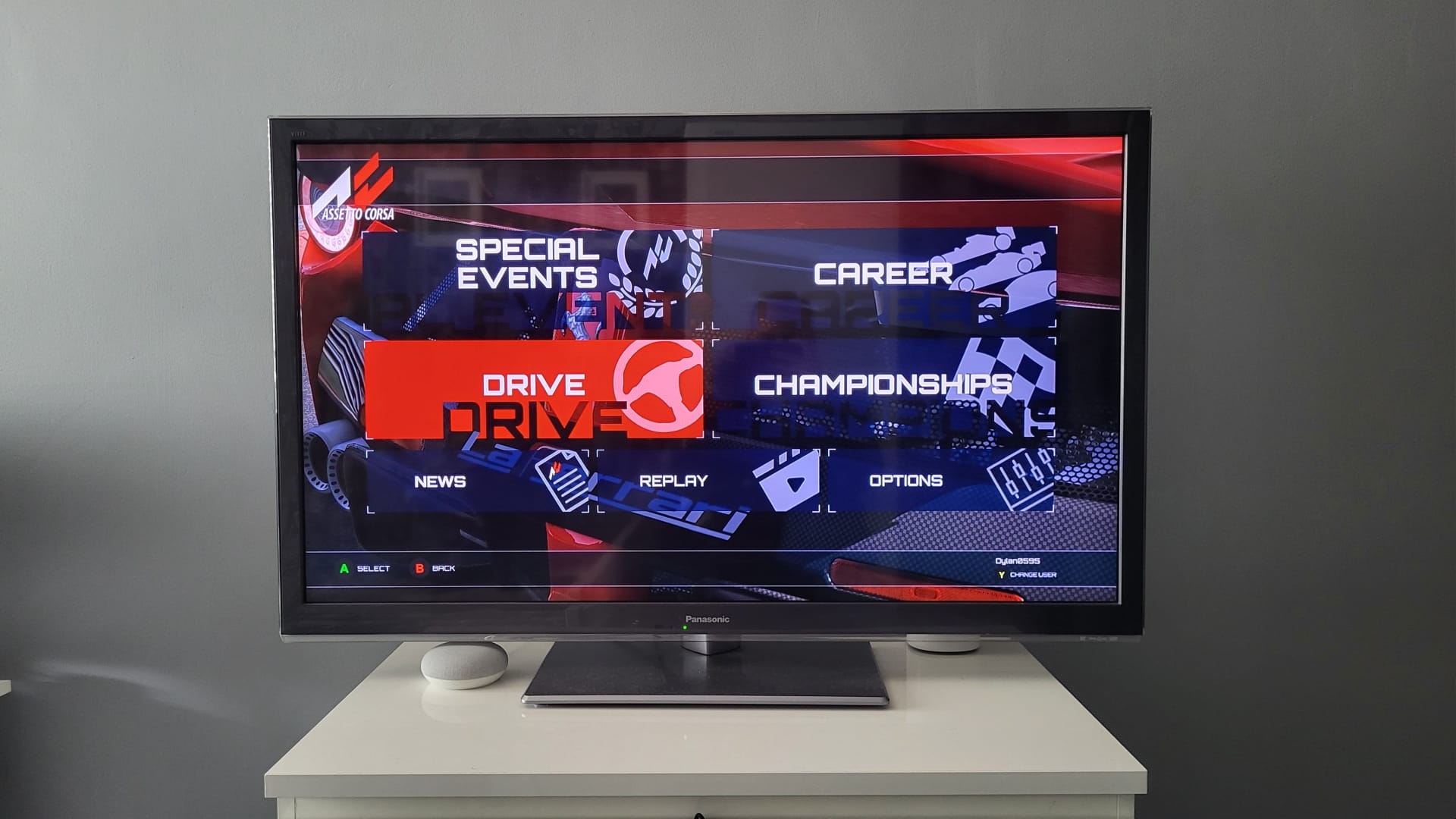
Not every racing sim is trying to do the same job. Some are serious circuit-focused platforms with demanding handling and stronger emphasis on setup work. Others are more forgiving and accessible while still giving you a proper steering wheel experience.
If you mainly want believable road and track driving, a more approachable title can be the best place to start. If you are obsessed with shaving tenths off lap times and learning how tyre temperatures affect grip, a more hardcore sim may suit you better.
There is no single best option for everyone. The honest answer is that the right sim depends on whether you care most about realism, online competition, variety of cars, ease of use or simply having fun after a long day.
What to spend on a beginner sim racing setup
Budget matters, and this hobby can get silly fast if you let it. A sensible beginner sim racing setup in the UK might sit around the low hundreds if you already own a console or PC and just need wheel-and-pedal gear. A stronger mid-range setup with sturdier mounting, better pedals and improved force feedback can move into four figures.
That is why value for money matters more than headline spec. It is usually better to buy a balanced setup than one standout component surrounded by compromises. A fantastic wheel paired with poor pedals and a flimsy stand is not money well spent.
You should also factor in the hidden costs. Floor protection, a suitable chair, a screen position that does not strain your neck, and perhaps headphones if you share the house all make a difference. None are exciting purchases, but they affect day-to-day enjoyment.
The trap of constant upgrading
One thing sim racing shares with wider car culture is the temptation to chase perfection that you may not actually need. Forums and videos can make it seem as though everyone has a full cockpit, triple screens and a wheelbase powerful enough to wrench your shoulders out of place.
Most people do not need that. In fact, many would be better off with a tidy, reliable, easy-to-use setup they can jump into for half an hour than a complex dream build that dominates the room and drains the bank account.
There is also a comfort factor. Heavier steering forces and more aggressive hardware are not always more enjoyable. If a sim racing setup leaves you tired after twenty minutes, it may be technically impressive but practically annoying.
Who should buy a racing sim?
A racing sim makes sense if you enjoy driving, like learning technique and want a hobby with more involvement than an arcade racer on a controller. It can also be a genuinely good way to understand car control, braking discipline and the effect of smooth inputs, even though it is no substitute for real-world driving experience.
It is less convincing value if you are only mildly curious and easily bored by setup or repetition. In that case, start small. Buy a decent entry-level bundle, see if you use it consistently and only then consider spending more.
That is probably the most useful mindset to take into sim racing as a whole. Ignore the hype, be honest about your space and budget, and build something that suits your life rather than your fantasy garage. A good setup is the one you actually use.