
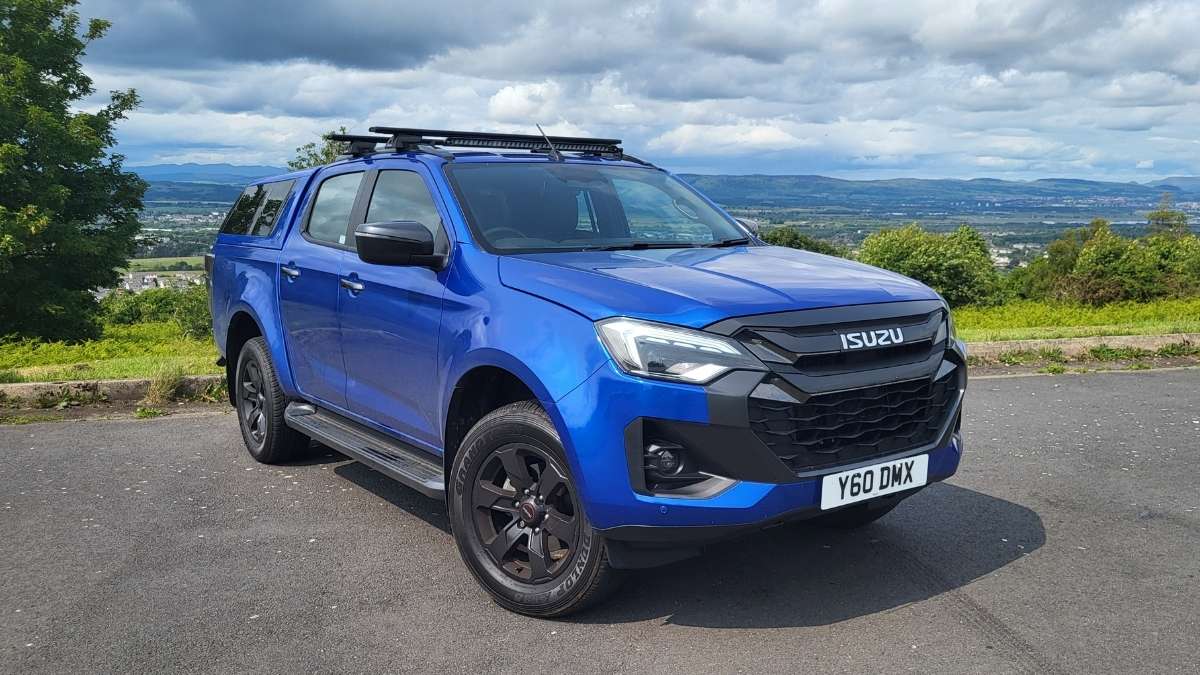
Isuzu has long branded itself as the Pick-Up Professionals since they entered the UK market in 1987, a title earned by building no-nonsense workhorses while others chased the lifestyle crowd. The Isuzu D-Max goes into 2026 with a makeover, adding smarter tech and sharper off-road chops.
But there’s a catch. The D-Max was once the hero of the budget-conscious buyer. Now, with the flagship V-Cross nudging £50,000, it’s playing in the big leagues against the Ford Ranger, Volkswagen Amarok, and Toyota Hilux. The question is: is it out of its depth?
Pros
- Easy on fuel
- Agressive design
- Excellent towing capacity
Cons
- Worrying quality control of dealer-fitted accessories
- Somewhat underpowered
- Quite expensive
2026 Isuzu D-Max first impressions
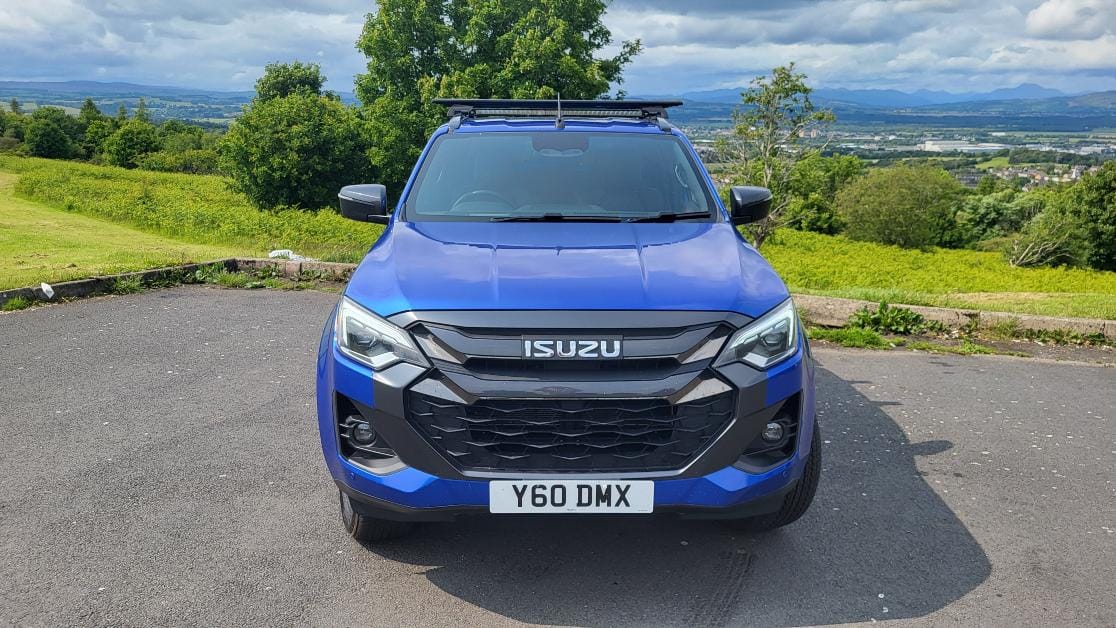
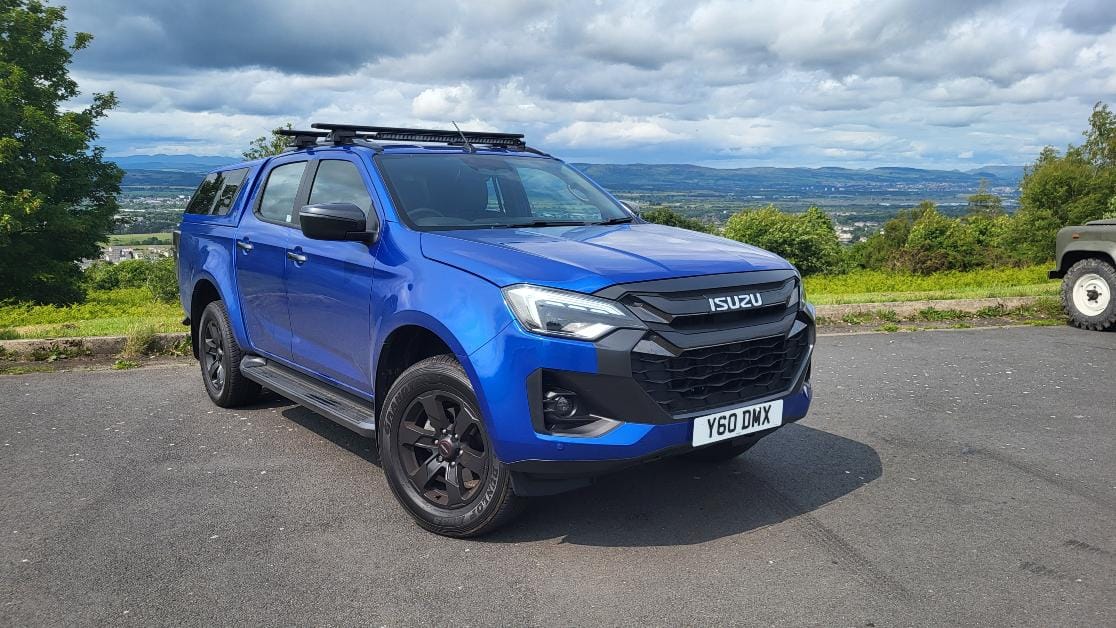
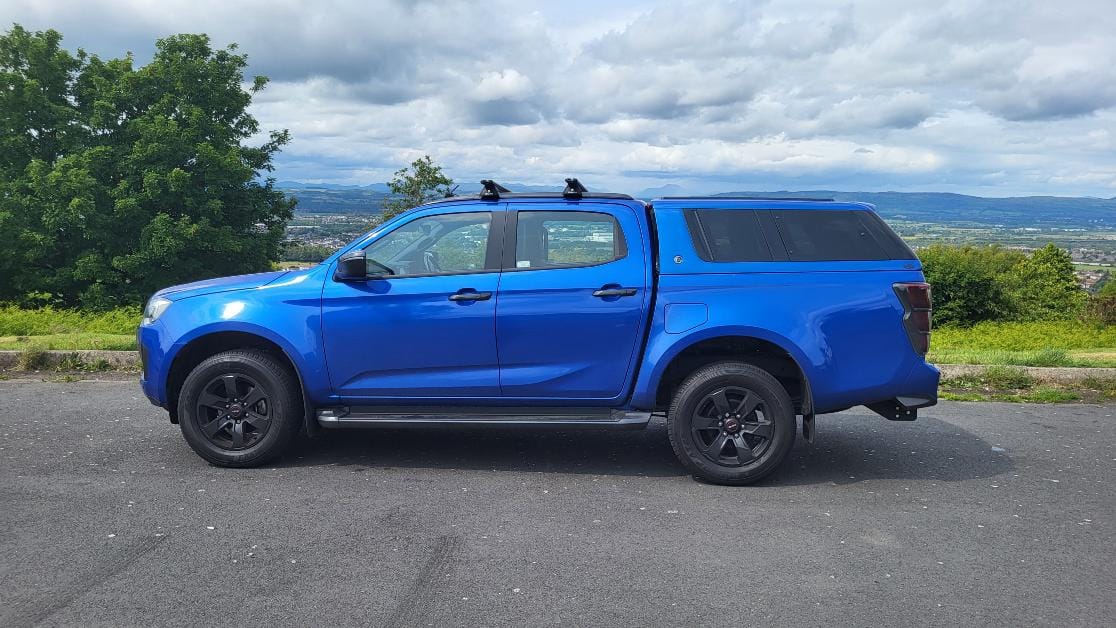
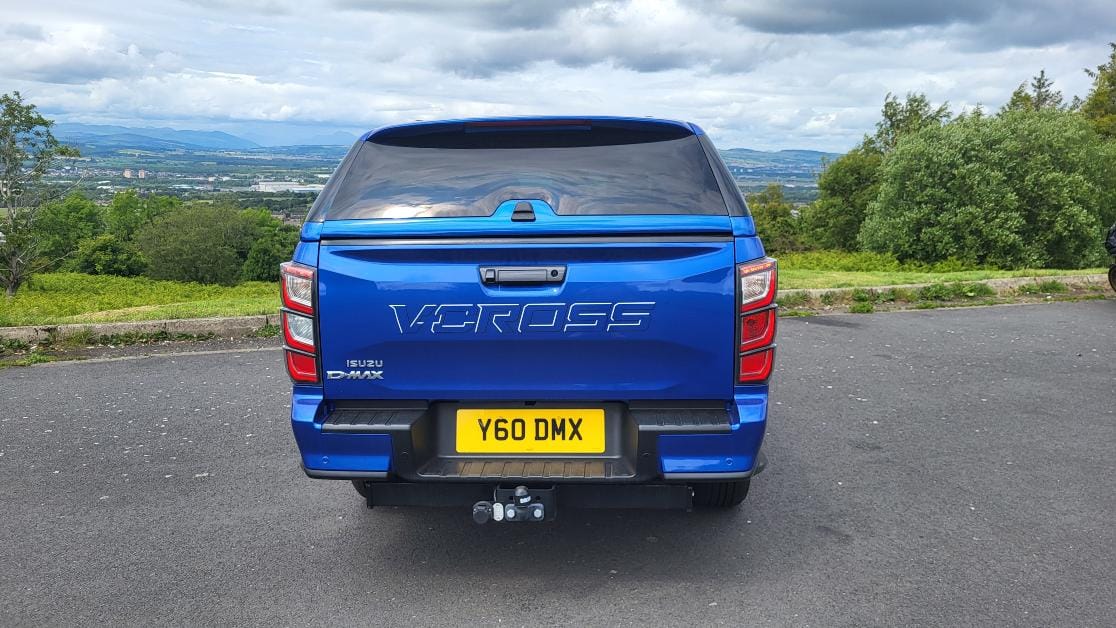
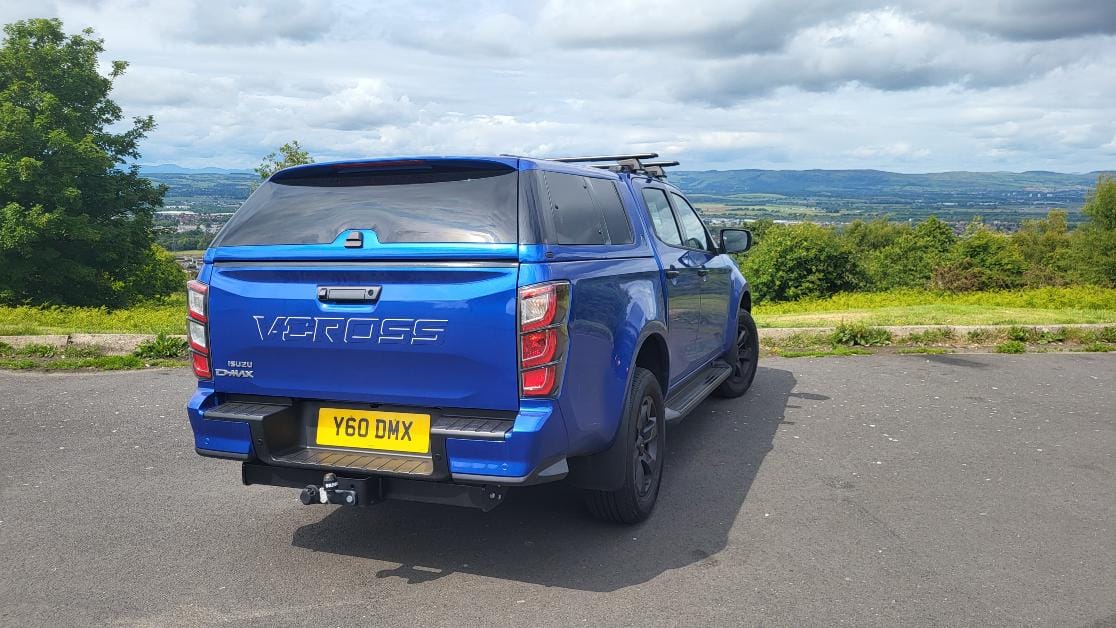
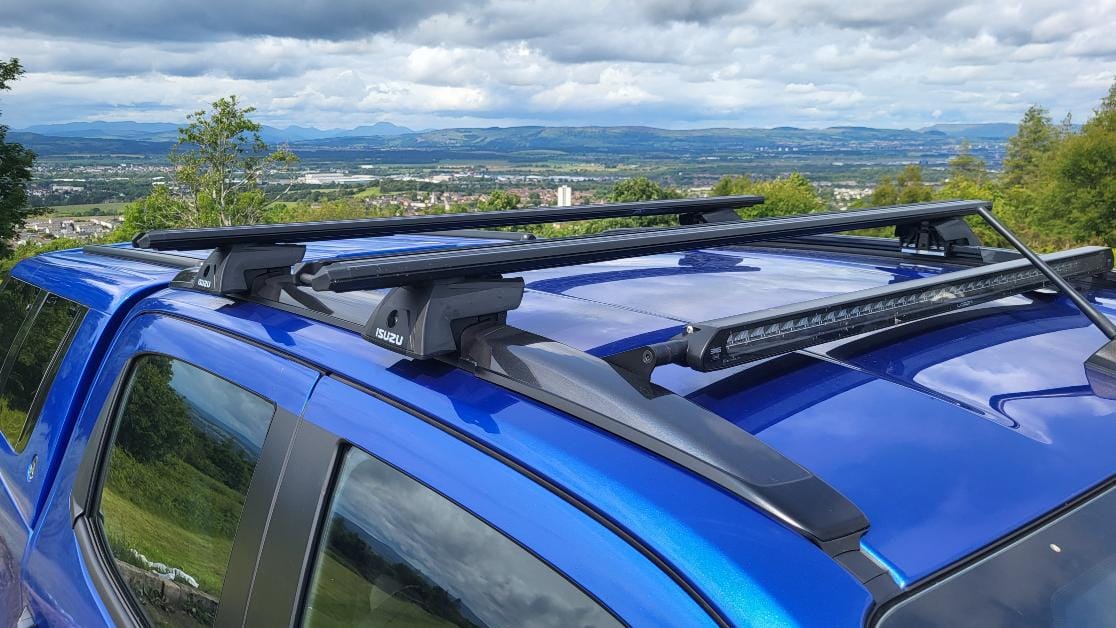
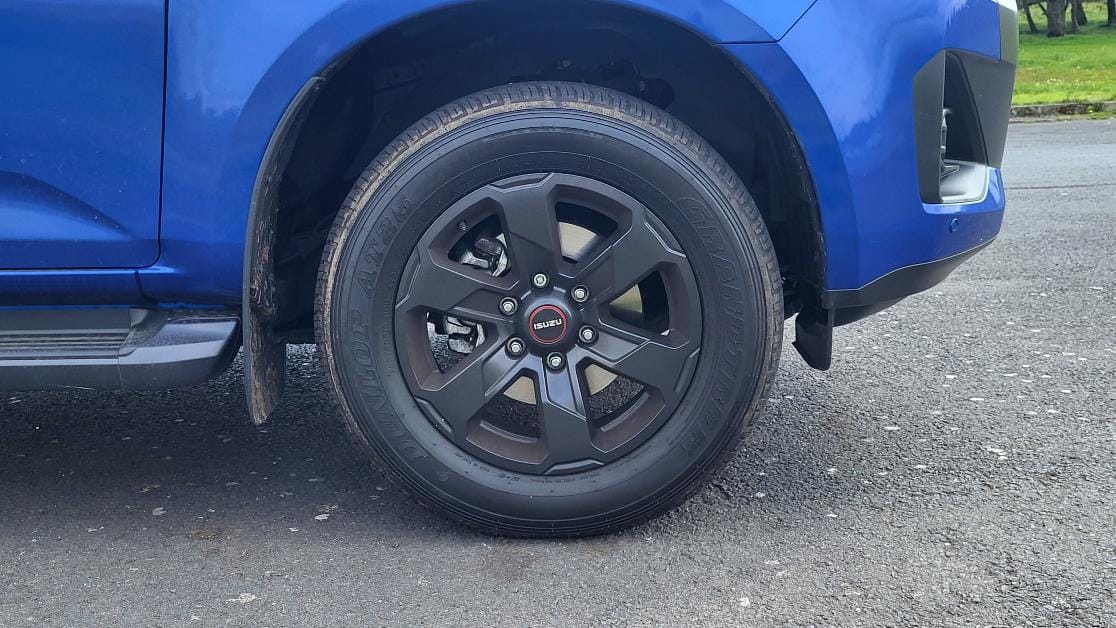
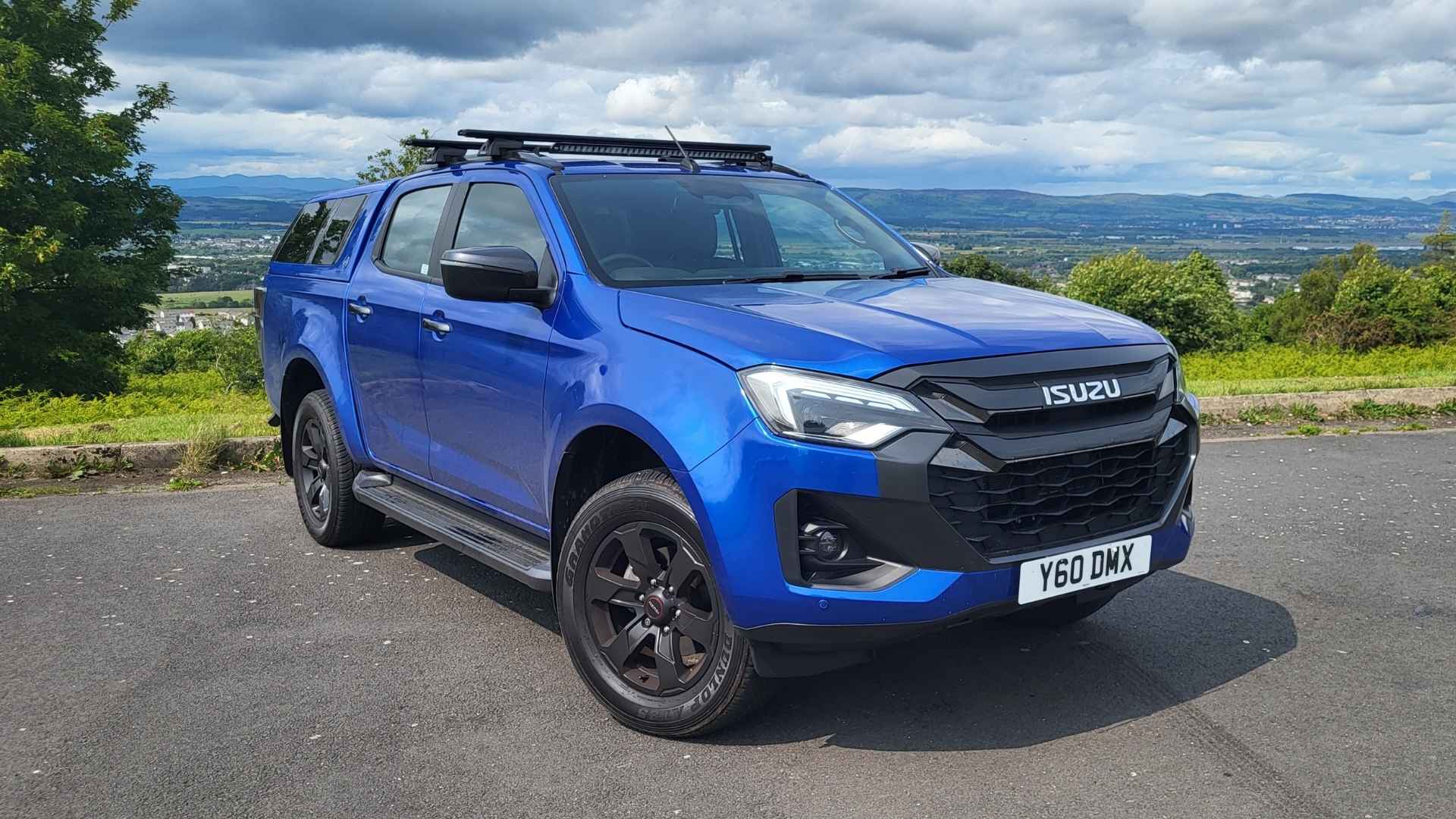
The 2025 facelift keeps the D-Max relevant. The V-Cross model I tested features Gun Metal door handles and Tough Style matt dark grey 18-inch alloys that give it a premium, aggressive stance. Isuzu has simplified the range into Business (Utility) and All-Purpose (DL20, DL40, V-Cross) models, making it easier for buyers to decide based on their lifestyle.
D-Max key features
- Rough terrain mode
- Wireless Apple CarPlay and Android Auto
- Leather interior
- 2- or 4-wheel drive available
- 3.5 tonne towing capacity
The Ca-nope-y
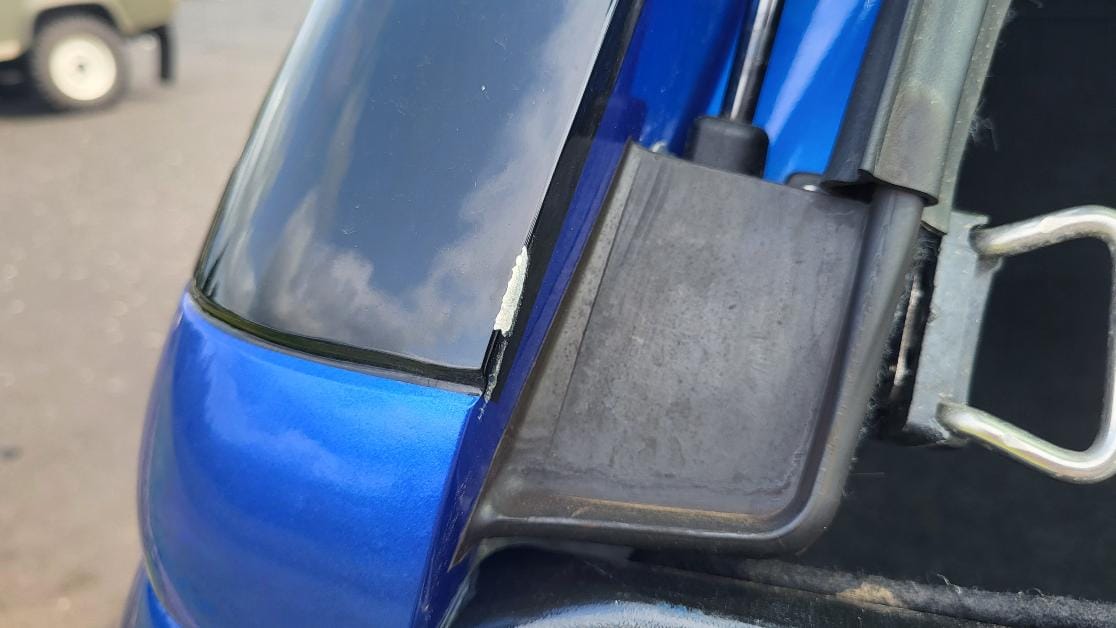
However, looking closely revealed a worrying oversight. The third-party canopy fitted to the load bed was slightly misaligned. The poor fit meant the lid window was difficult to close, allowing water into the carpeted load bed, actively scraping the paint off the edge, and risking the window smashing every time.
For a vehicle with a 12-year anti-corrosion warranty, having a dealer-fit accessory rub the bodywork down to bare metal is a major red flag that buyers need to check before taking delivery.
How does the Isuzu D-Max drive?
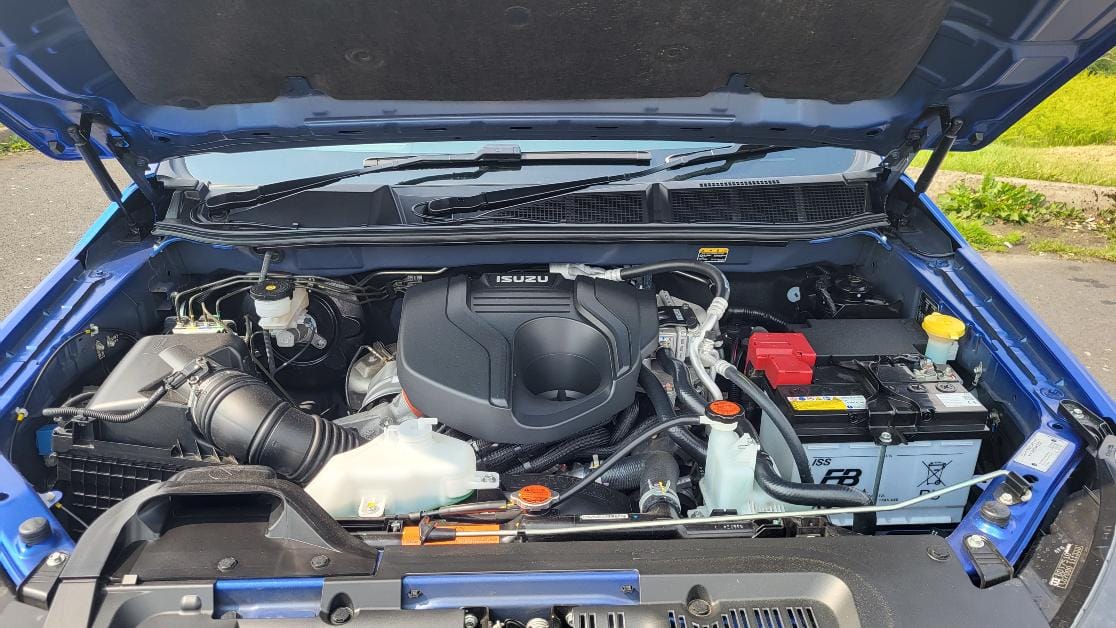
Isuzu’s marketing says the D-Max is “Driven To Do,” but the engine room tells a different story. While rivals like the Ford Ranger and Volkswagen Amarok pick-ups offer muscular V6 options, Isuzu has stuck with its traditional 1.9L four-cylinder turbo diesel. At idle, the engine is rough and agricultural; under acceleration, it’s loud without being particularly fast. On a smooth motorway, the D-Max is a steady cruiser, but get it onto a single carriageway and its utilitarian roots are laid bare.
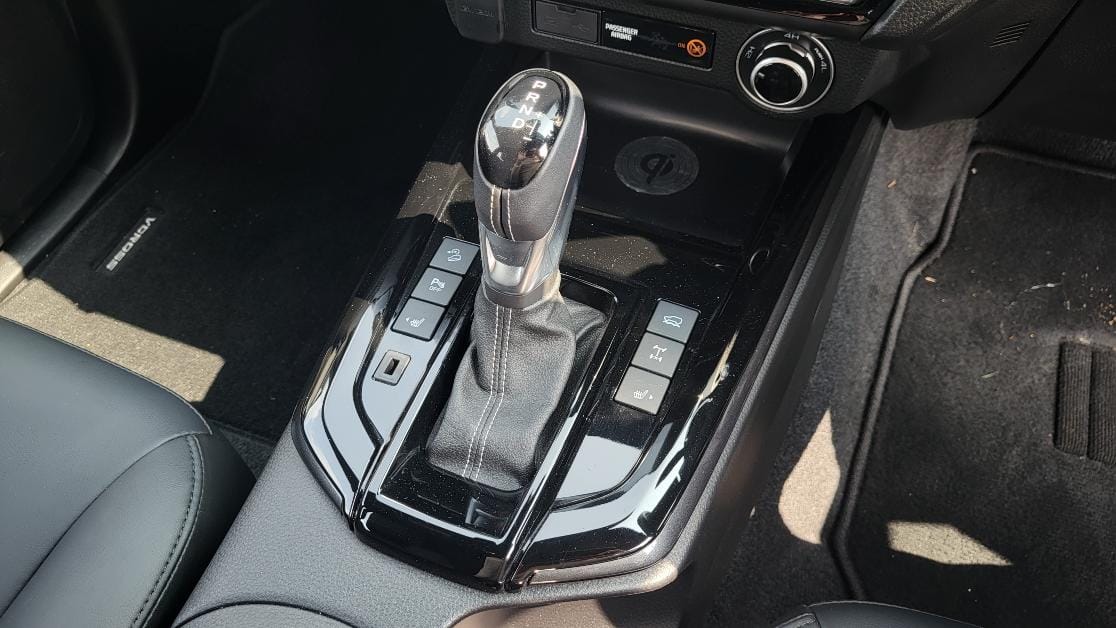
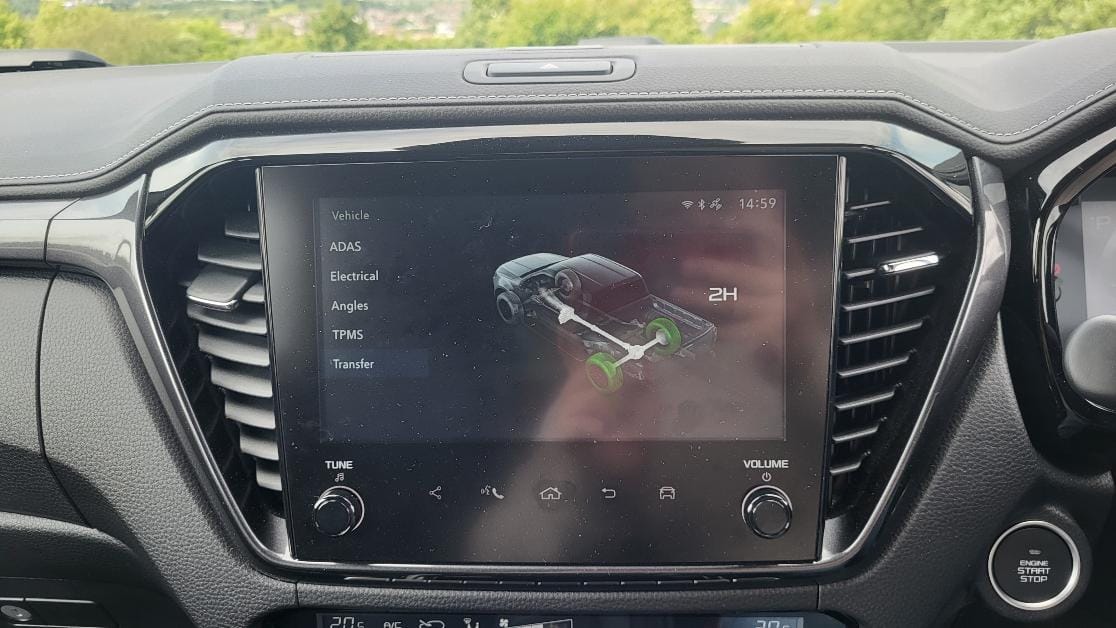
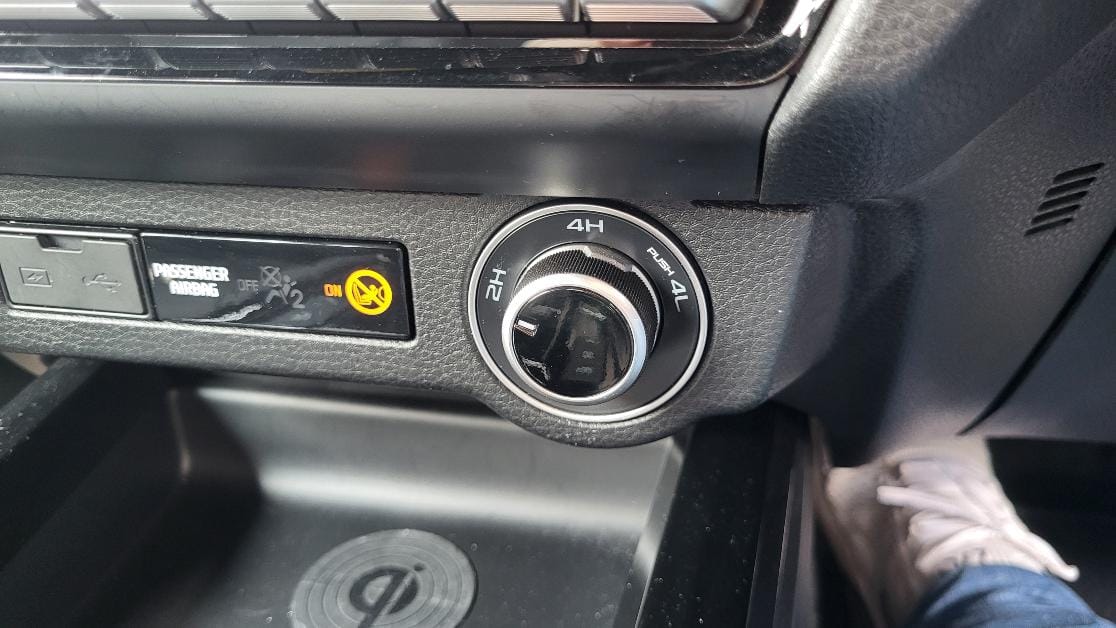
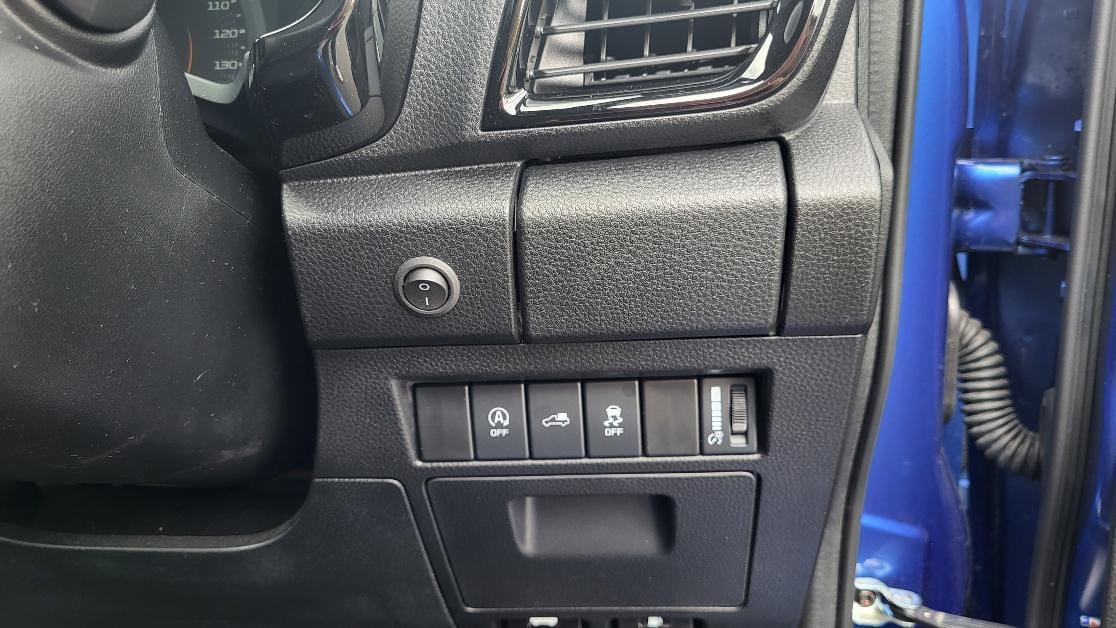
The suspension is firm, but it can be quite bouncy unladen. That said, the new Rough Terrain Mode is a great addition. It works almost like an electronic limited-slip differential by using the brakes to reduce wheel spin and improve traction on loose surfaces.
The “Shift-on-the-fly” 4WD system enables switching between 2H and 4H at speeds up to 60mph, which is perfect for unpredictable Scottish weather. However, the steering feels vague and lacks the car-like precision found in the latest Ford Ranger. It feels like a truck, which is fine for a workhorse, but less so for a £40k daily driver.
2026 Isuzu D-Max performance
| Model | V-Cross Double Cab |
| Engine | 1.9-litre 4-cylinder Turbo Diesel |
| Transmission | Automatic |
| Horsepower | 162 BHP |
| Torque | 360 Nm @ 2,500 RPM |
| Drivetrain | 4-wheel drive |
| Payload | 1,085 kg |
| Towing | 3,500 kg (braked) |
| 0-62 MPH | 13 Seconds |
| Top Speed | 112 MPH |
Since every version of the new D-Max weighs under 2,040 kg, even extended and double-cab variants are classed as dual-purpose vehicles, escaping speed restrictions placed on commercial vehicles. Though, it works significantly harder to reach motorway speeds, taking an embarrassing 13 seconds to reach 62 mph. So, I suspect hauling a full 3.5-tonne trailer behind it would feel laboured. At this price point, the lack of a larger engine option is a dealbreaker.
Fuel economy
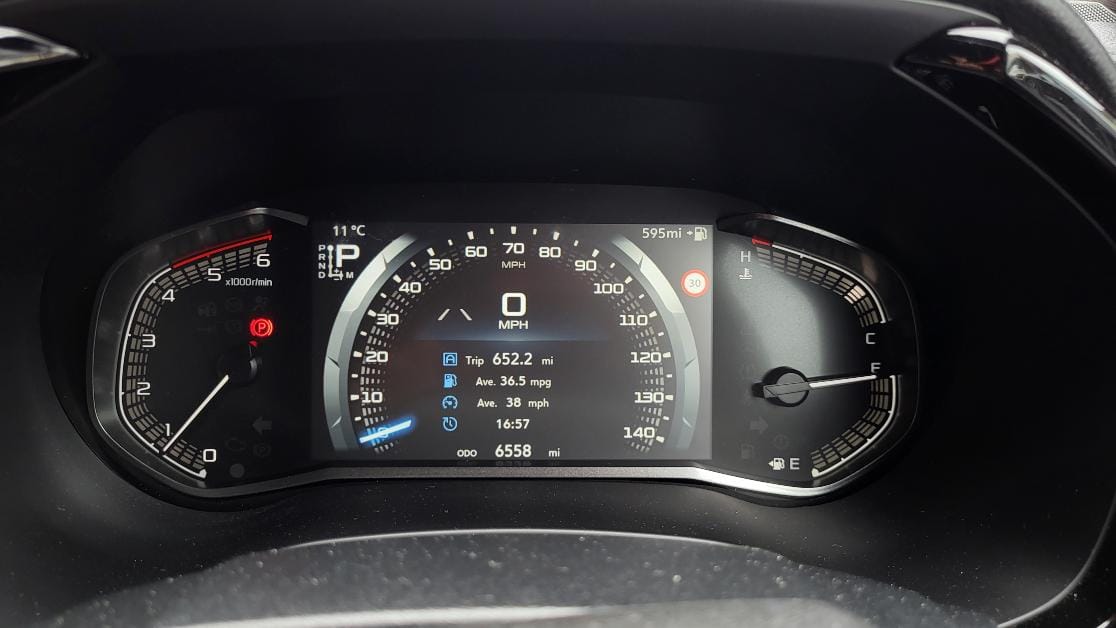
While the engine lacks grunt, it makes up for it in efficiency. Where most manufacturers’ claims are a fantasy, Isuzu seems to have undersold the D-Max. Achieving 36.5 MPG against a 31.4 MPG claim is unheard of in this segment.
| Combined | |
| WLTP: | 31.4 MPG |
| Fuel Economy As Tested: | 36.5 MPG |
Not only is that better than the official figures, it’s also a massive improvement over the 27 mpg I recorded when testing the Ford Ranger Wildtrak. For those looking to keep running costs down, the D-Max’s smaller engine becomes a benefit.
Interior design and comfort
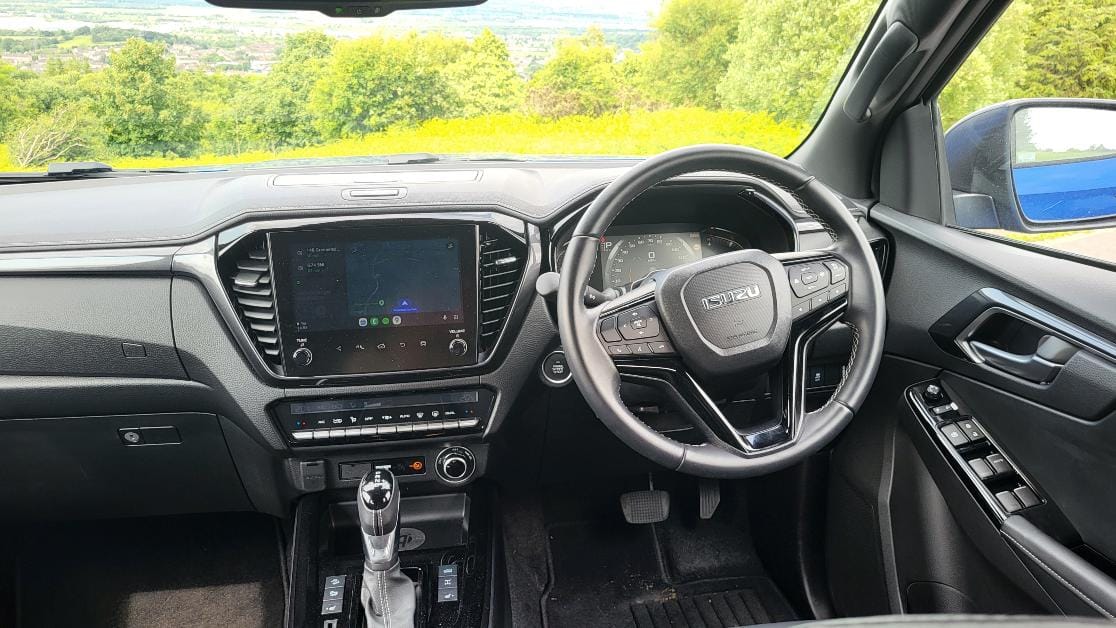
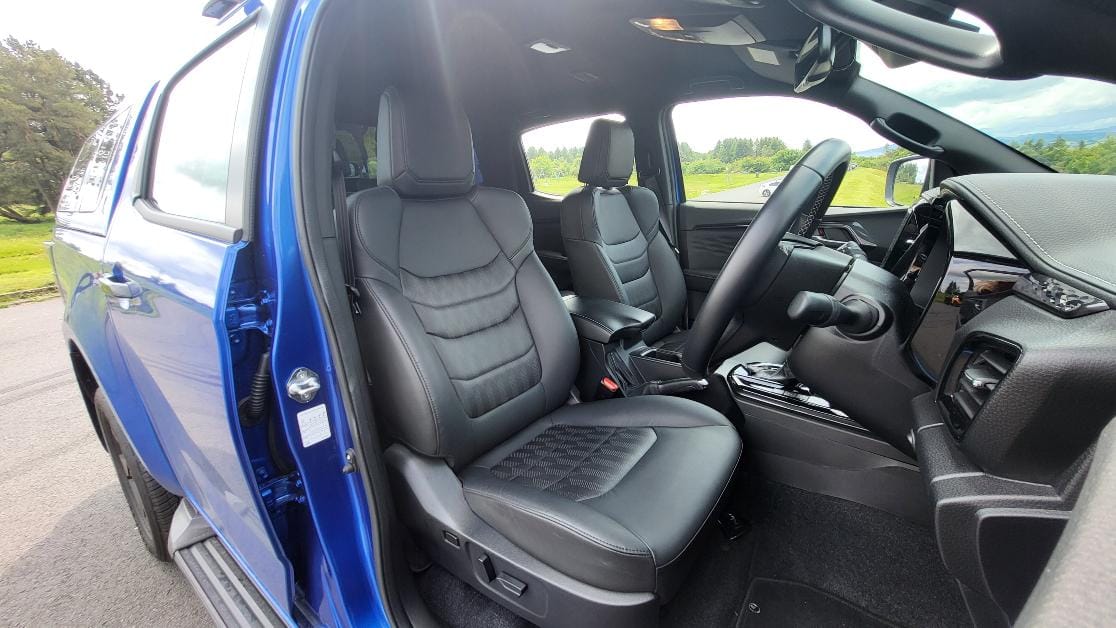
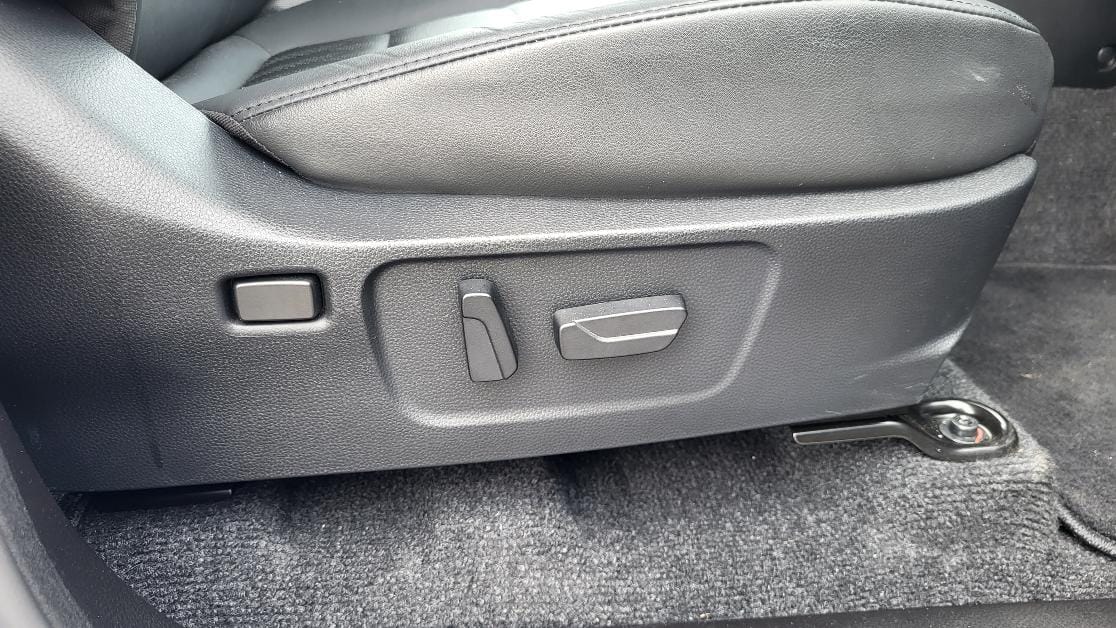
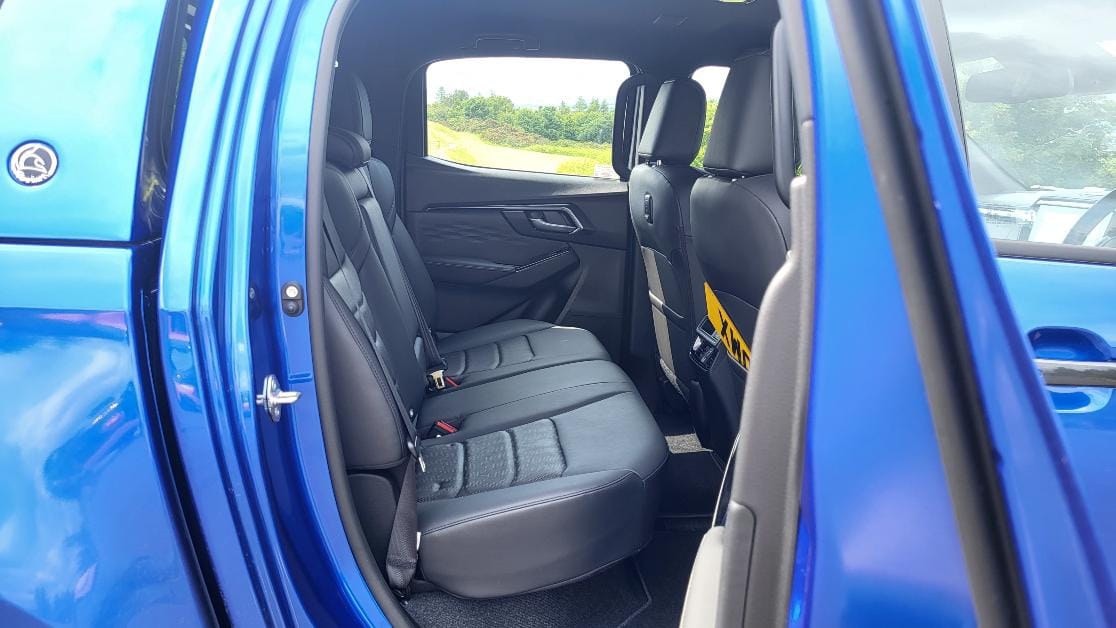
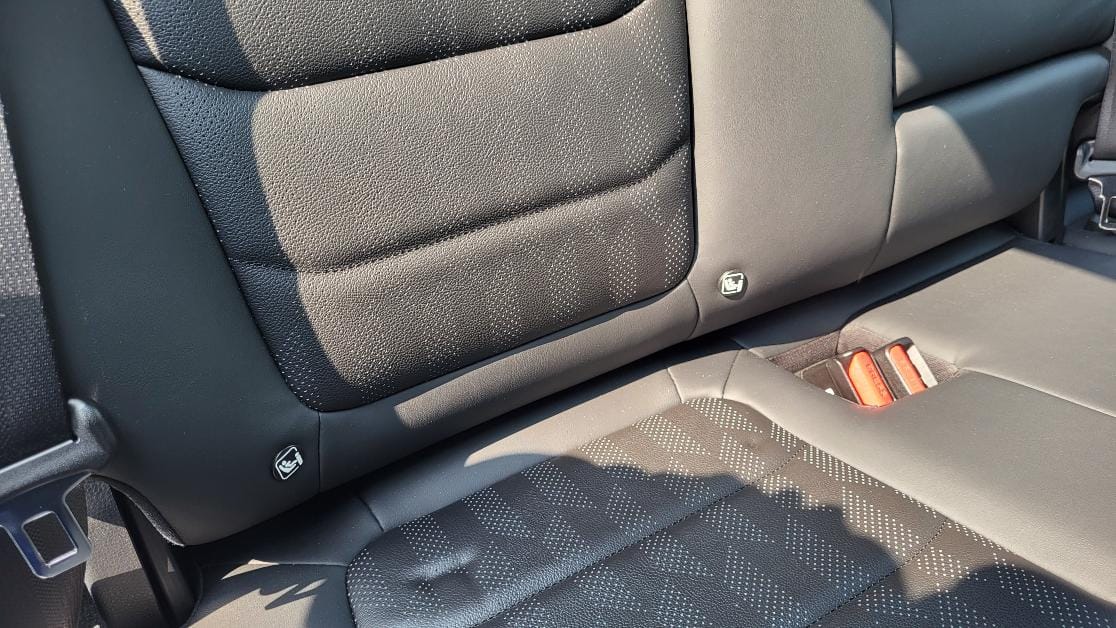
You can see the luxury aspirations inside the V-Cross. It gets leather upholstery with an electrically adjustable heated driver’s seat. The build quality feels solid (nothing rattles while driving), but the overall design is starting to look old. Plus, it doesn’t take long to notice the cheap plastic splattered around the cabin. It’s still more practical than premium.
Technology and ease of use
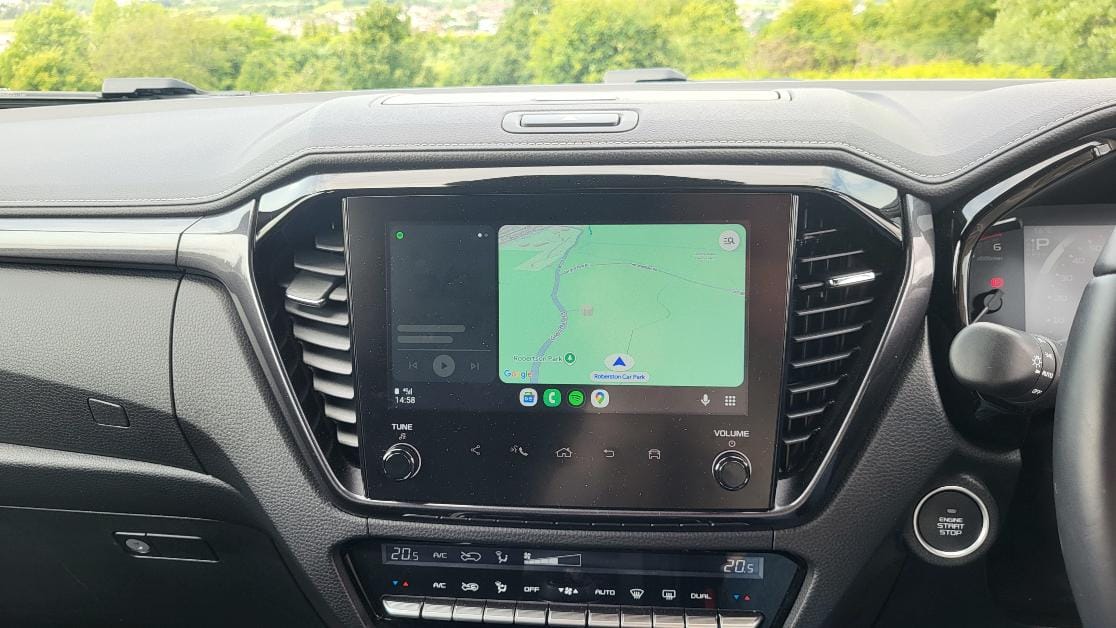
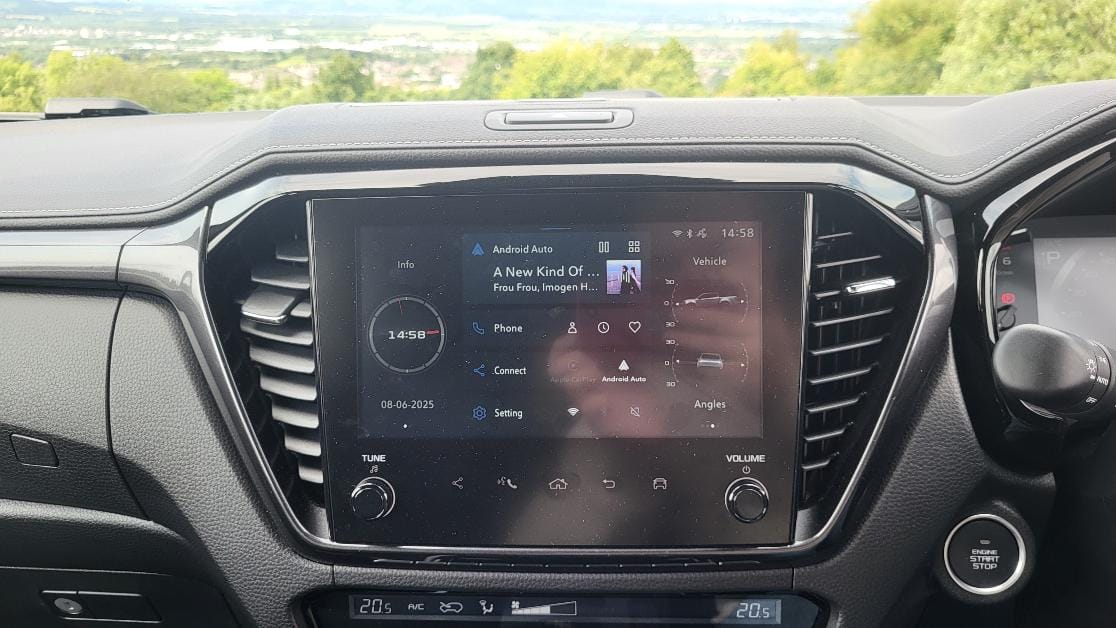
Finally, the V-Cross features an updated 9-inch Multifunction Colour Touchscreen, which now includes fully wireless Apple CarPlay and Android Auto, along with a wireless charging pad for mobile phones. While the wireless connectivity is a great addition, the underlying software is slow to respond and feels dated.
It can take several seconds to switch between menus, and the screen isn’t nearly as bright or sharp as the tablet-style displays found in rivals. It’s a shame, as the inclusion of eight speakers and an auto-dimming rearview mirror shows that Isuzu is trying to move upmarket.
The new D-Max boasts a suite of advanced driver assistance systems (ADAS) too, including:
- Attention assist
- Autonomous emergency braking
- Intelligent adaptive cruise control
- Traffic jam assist
- Turn assist
Storage and boot space
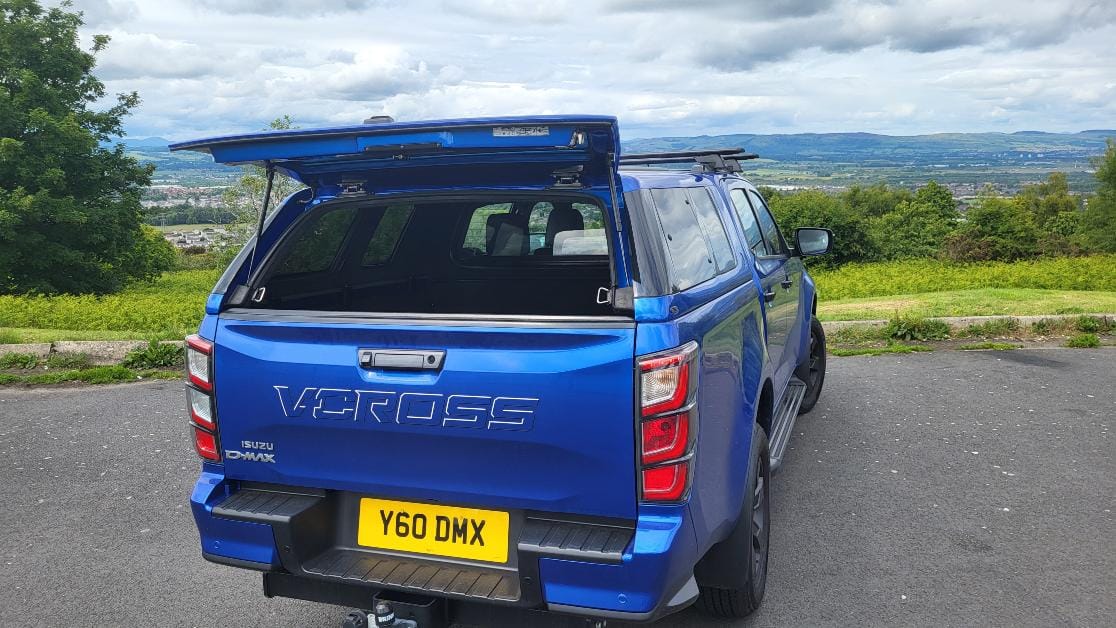
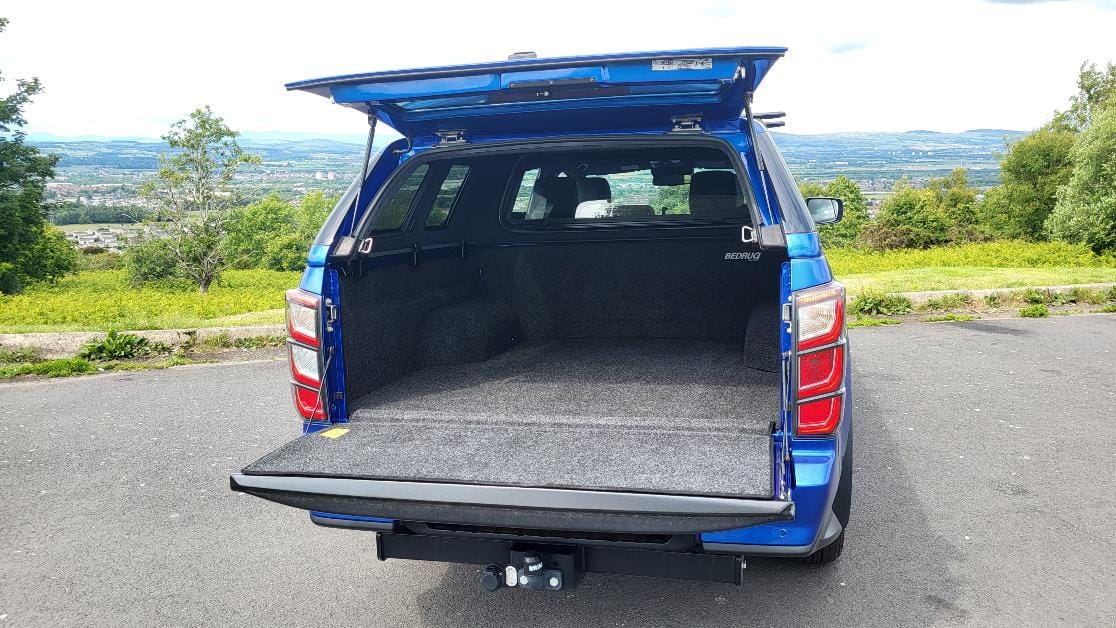
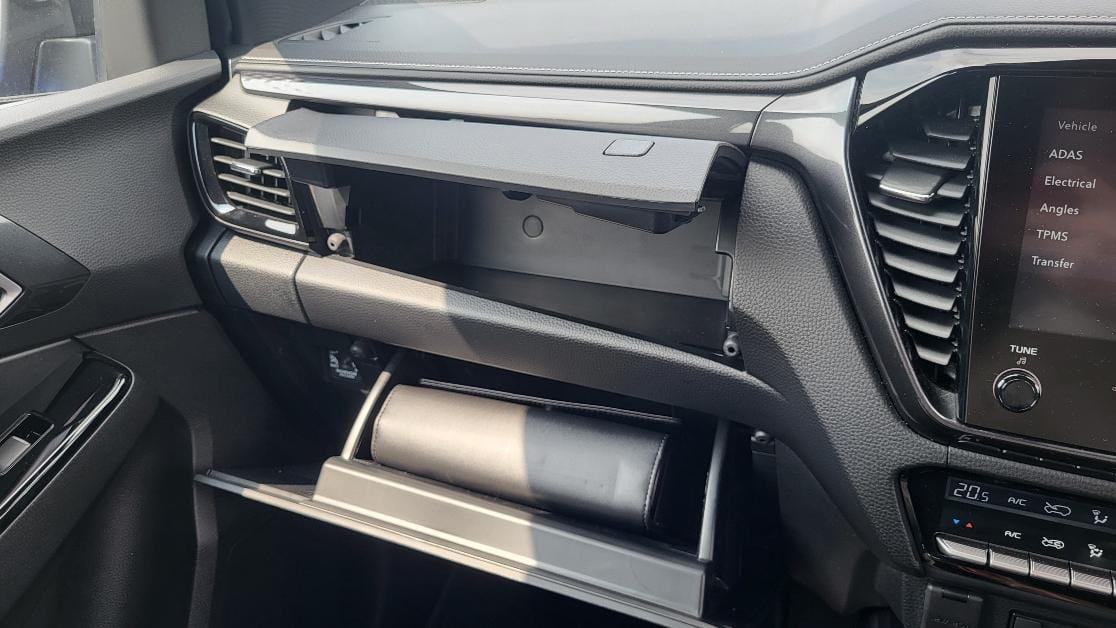
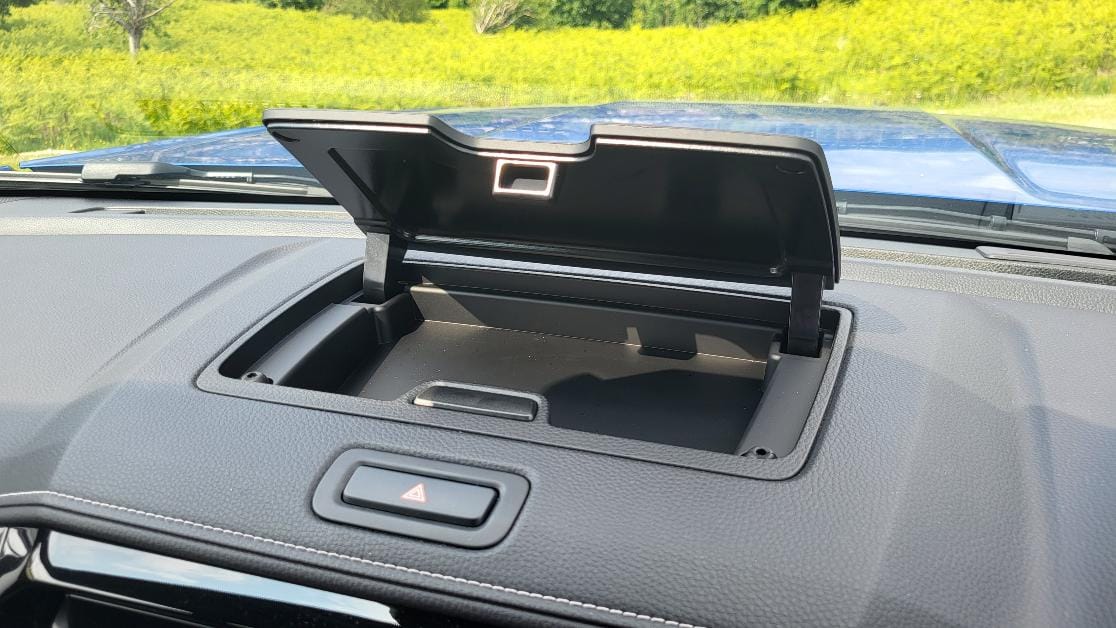
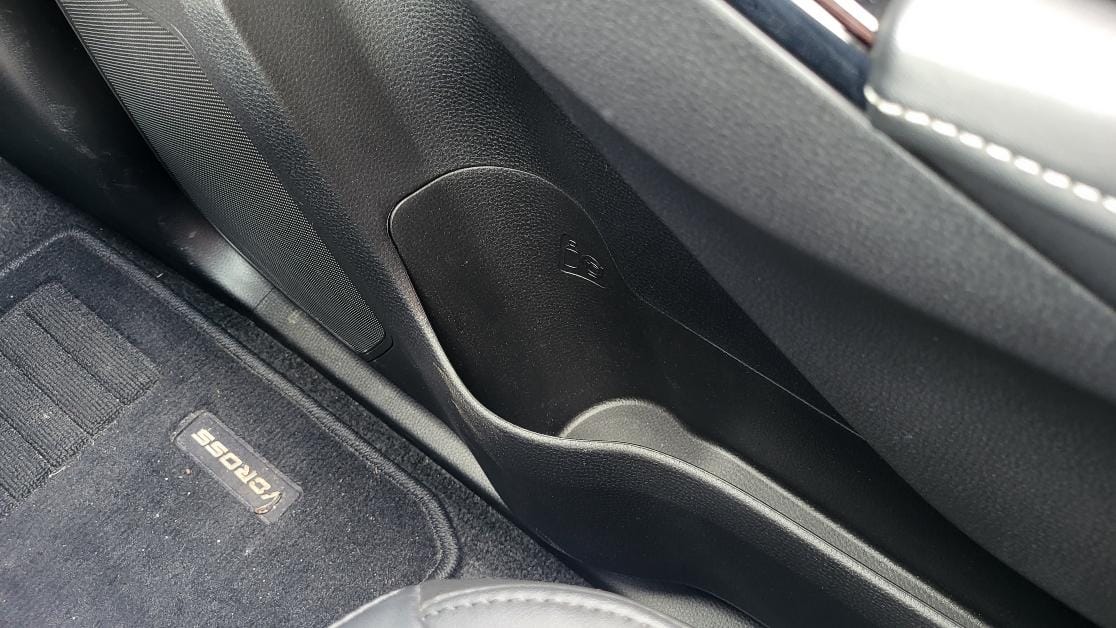
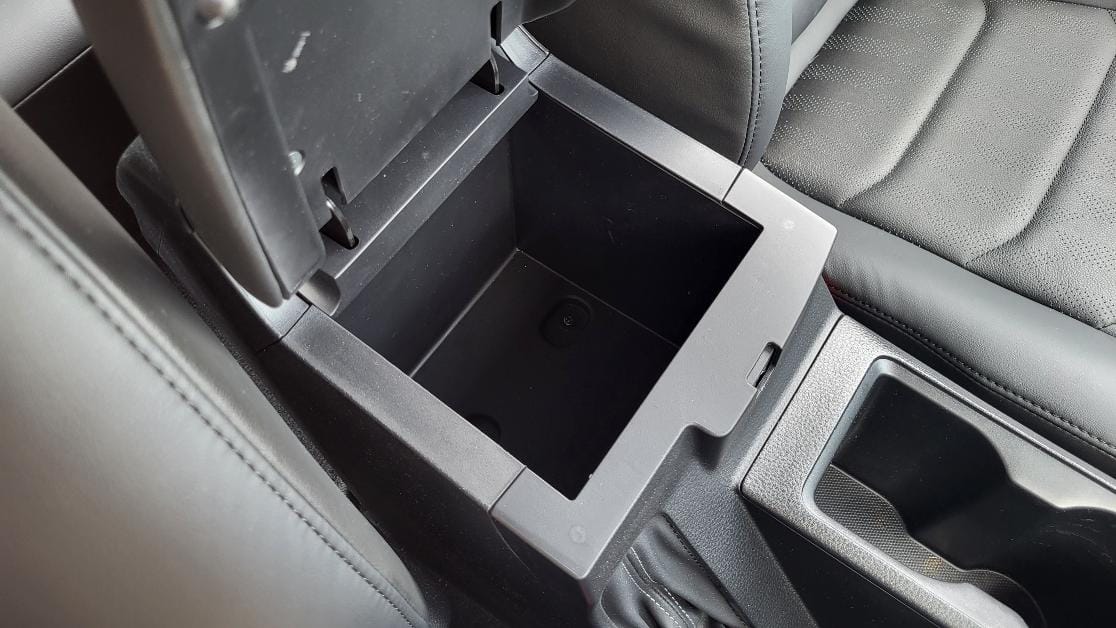
Practicality is where the D-Max usually shines. It features a flat load bed that can handle a 1,105 kg payload in V-Cross trim, and can legally tow 3.5 tonnes while boasting a 5-star safety rating. There’s plenty of storage inside too, with twin glove boxes, a pop-up tray in the dashboard, large cupholders in the centre console and door bins, and an ample space under the central arm rest.
However, as noted earlier, the alignment of the 3rd-party canopy on my test vehicle was a concern. If you are buying one, ensure you check the accessory fitment thoroughly to avoid the paint damage I experienced.
Should you buy an Isuzu D-Max?
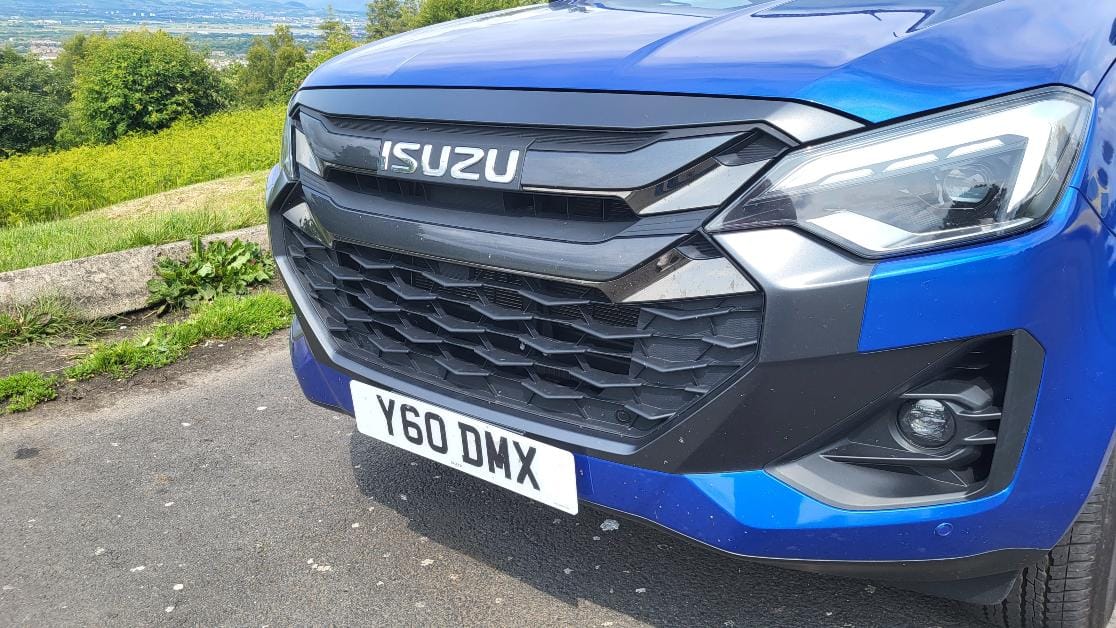
The Isuzu D-Max V-Cross is a rugged, reliable tool that is increasingly difficult to justify as a luxury purchase. If you value a 125,000-mile warranty and want a truck that is legally allowed to do 70mph on a dual carriageway, it is still the most sensible choice. Its real-world efficiency of 36.5 MPG is also a standout feature that puts many rivals to shame.
However, at £40,605 (£48,646 including VAT) for my test car, the value just isn’t what it used to be. The engine is noisy and underpowered, and the infotainment tech feels like it belongs in the last decade. For significantly less money, you could buy the underrated KGM Musso instead. The D-Max is a good truck, but at this price, it needs a more engine options and a major software update before it can truly be called a great one.
FAQs
How much does an Isuzu D-Max cost?
Prices for the Isuzu D-Max start from £26,405 (excluding VAT) for the Utility 4×2 Single Cab.
What is the warranty on the D-Max?
Every new Isuzu D-Max comes with a 5-year or 125,000-mile warranty and 5 years of UK and European roadside assistance.
Discover more from Dylan's Car Reviews
Subscribe to get the latest posts sent to your email.